
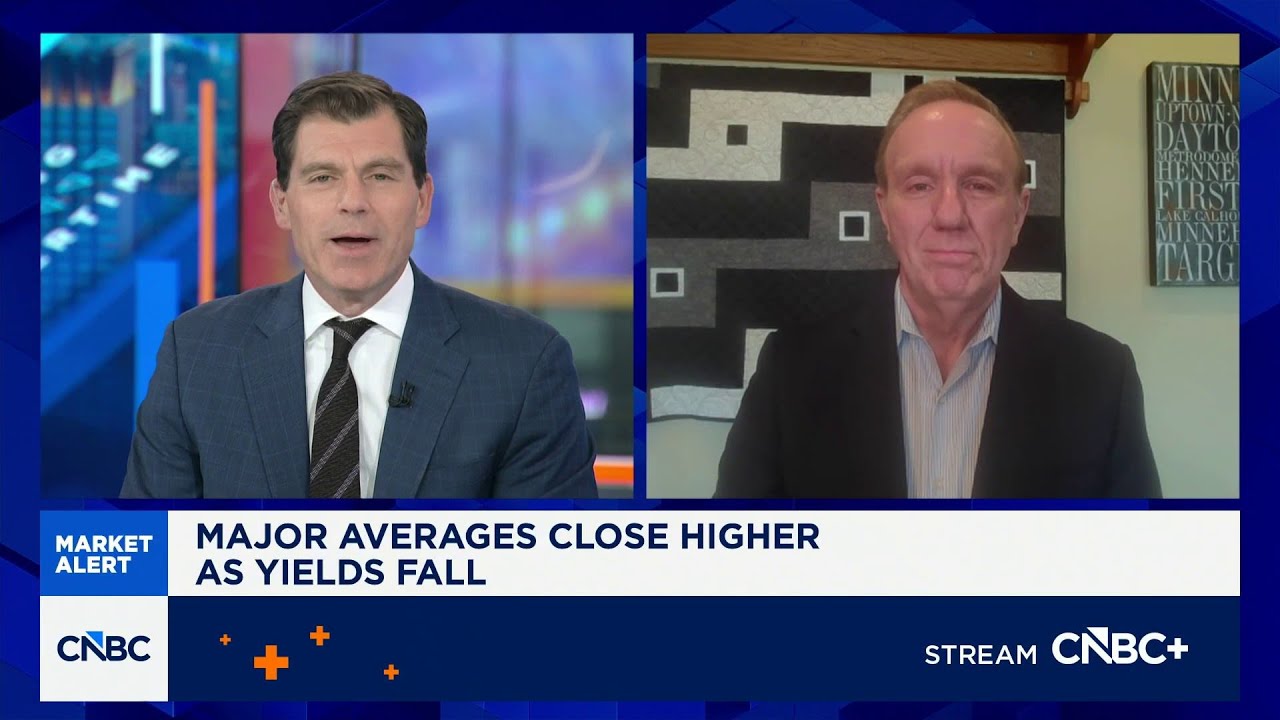
Joining me now is Jim Paulsen. He’s author of the newsletter Paulsen Perspectives, long-time economist and strategist. Jim, it’s great to see you. >> Thanks for having me, Mike. Great to see you as well.
>> And you know, it’s it’s funny cuz the narrative has been actually all about a potential overheat, right? Of CapEx, of yields going higher, of earnings being almost too strong. But you’re you’re trying to I guess navigate around that immediate news flow and say maybe we’re losing some of the thrusters of this market. What are you focused on? >> I think so.
I think the what bothers me about the stock market a little bit I guess is that I I think it’s used up a lot of capacity and then we’re starting to put some pressure on it I think. That you know, just quick on capacity, if I if I look back to 1950 the price level of the S&P 500 to its trend line average, it’s 60% above that. The earnings on trailing 12-month basis are 60% above trend line. The price level being that high is only that higher at the top of the dot-com and earnings have never been that high above uh trend line levels. So there’s I you know, how much higher can they go?
Earnings estimates compared to historic norms have been much higher almost record-setting and now going back to 1990. So there’s a lot of optimism in those earnings numbers overall. If I look at you know, profit margins they’re at record highs. If I look at labor costs to GD overall GDP, they’re they’re at record lows. If I look at investment spending to GDP, it’s at record highs compared to the post-war period.
How much capacity is there left to squeeze more profits out of this on that basis? If I look at what investors are doing, household equity holdings as a percent of total financial assets are at record high. Household cash holdings to the market capitalization of the stock market is close to record lows. You know, if you look at valuations, they’re not all record highs, but they’re they’re fairly high. And And if I look at sentiment in the market, you know, at best you could say I think it’s complacent.
Um you know, you get a lot of people that have gotten used to buying the dip and it’s worked out okay and it’s that’s what they think is going to continue. No one’s worried about recession anymore, Mike, because we haven’t had one for 16 years. So, I just think it’s a vulnerable market and then we’re bringing some pressure, you know, we’re raising the long-term bond yields. Real money growth is, you know, maybe average you 1 and 1/2% in the last year year and a half. The dollar’s still within 8% of its all-time record high going back to 1970 in real terms.
>> Yeah. >> The federal deficit, it you know, has been contracting over the last year and a half. So, there’s some things I think bringing pressure, including like oil prices, uh on the system that’s already kind of at full capacity. >> Yeah, you make you make a good case that, you know, the pendulum in many respects seems to be pretty far in one direction uh on a lot of those different measures. And then I guess in the maybe more immediate term, uh what are you thinking about the pace of economic activity?
It seems like you think there’s waning momentum. Maybe that helps to drag down Treasury yields, uh but not to the benefit directly of stocks. >> Yeah, the key here, you know, if you look at, you know, capital spending’s on fire and there’s no doubt about it, investment is on fire, that side of the economy. But the consumer is definitely slowing down. You look at nonfarm payroll employment or this morning’s ADP numbers, they’ve been going back over the last few weeks, weakened again.
Retail numbers from Johnson Redbook or the last retail sales reports down. Housing activity is is fairly punk overall. So, I I do think that there’s momentum slowdown. The Citigroup US economic surprise index has fallen from 60 to 25. It’s starting to really show a slower economic momentum uh going on.
The question will be if rates do come down here under slower momentum, how will the stock market react? Right now, like today, rates are down, people are less worried about inflation. It’s a good thing. But I think inflation fears are going to kind of moderate, and I think recession fears are going to enhance. And if that occurs, we may go through a period yet this year where lower rates coincide with falling stock prices rather than the other way around.
>> And how does the the effort by Treasury last week to to sort of draw a line and say we’re going to be, you know, perhaps doing more buying of of longer-term Treasuries, and then today Stanley Druckenmiller criticizing that move. Is that noise around the edges, or does that matter for for the direction of things? >> I think it’s mainly noise. I mean, I the whole thing about long-term bond yields of late, Mike, has got me a little bit baffled, you know, with the warship announcement and then Secretary Bernanke and all the that the bond market’s going on a, you know, bond vigilante moment of raising yields by themselves. I don’t see where they’ve gone up that much.
I mean, the 10-year yield tonight is still about the same range it’s been at for 3 years, and so is the 30-year yield for that matter. It’s not much higher than it than it’s been. Every time yields go up, there’s this idea that there’s a bond vigilante sighting, and I don’t think it’s really happening. The the I I would prefer to see the market setting a lot of rates and having policy officials follow their lead, and certainly I I don’t necessarily want fiscal policy trying to do what monetary policy is supposed to do in in the market. But I really think what has been done so far is not that that aggressive.
It’s not that meaningful. It’s more of a talker than it is a real thing at this point.
Leave a Reply